
Flower Arrangement Techniques: How to Create Stunning Floral Arrangements for Any Setting
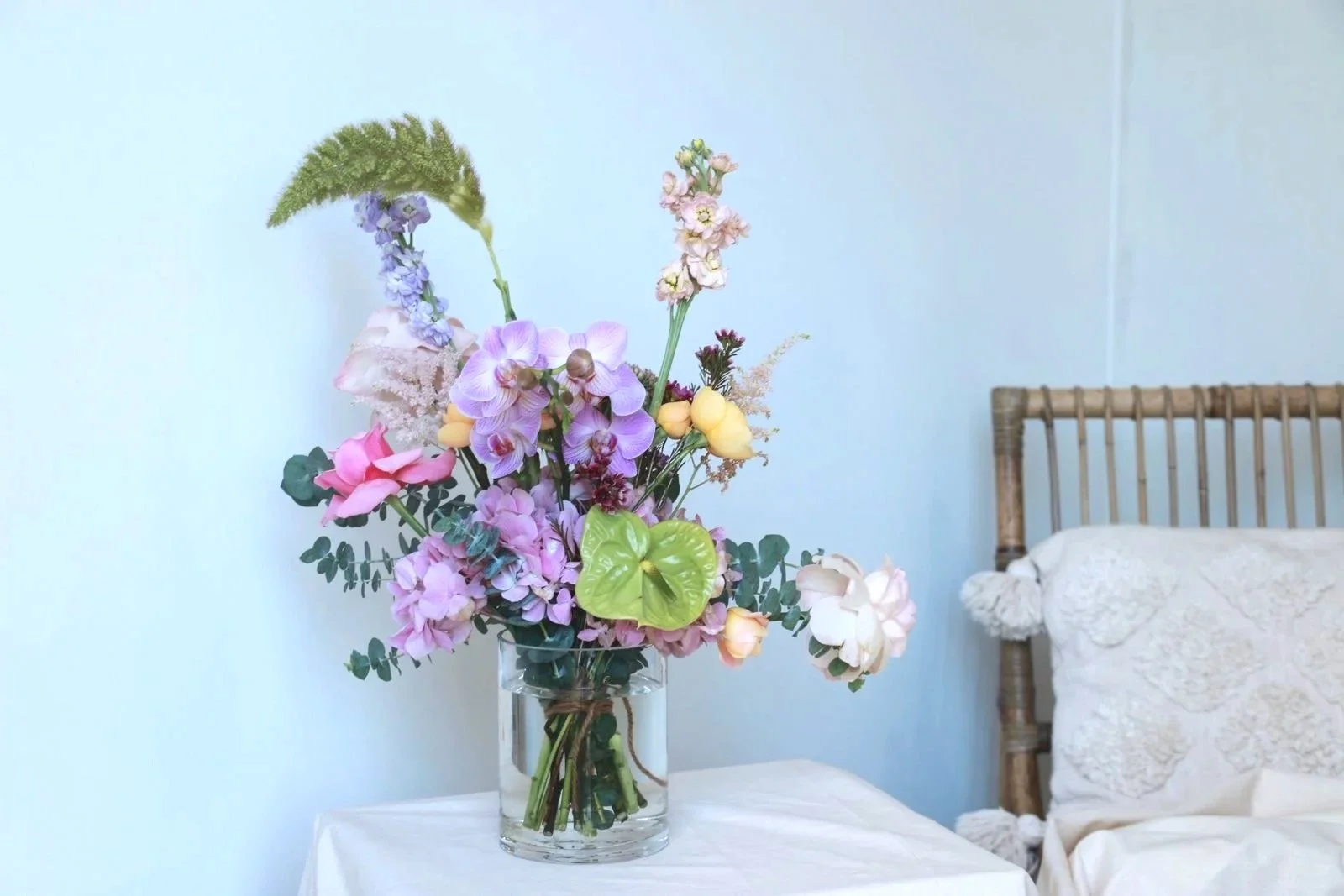
Learning how to arrange flowers beautifully can elevate any space or event, whether it's a wedding, a party, or your own home. This guide will walk you through the most common flower arrangement techniques, answering your questions about how to balance colours, shapes, and textures to create visually appealing arrangements. Whether you're a beginner or looking to refine your skills, you'll learn how to make professional-looking flower arrangements with ease.
How do I choose the right flowers for a balanced arrangement?
The first step in creating a beautiful flower arrangement is choosing the right flowers. But how do you ensure that your choices work well together?
Start by selecting a focal flower, this is the star of your arrangement. Popular focal flowers include roses, peonies, or lilies, which are larger and more attention-grabbing. Once you’ve picked your focal flower, choose supporting flowers that complement the main blooms but don’t outshine them. For instance, if you’ve chosen bright red roses, consider white lilies or green hydrangeas as your supporting flowers.
Next, add filler flowers, like baby’s breath or greenery, to give your arrangement volume and texture without distracting from the main blooms. Remember to balance colors and textures. Too many bold colors can clash, so if your focal flower is vibrant, opt for softer, neutral tones in your supporting and filler flowers.
What is the best method to arrange flowers in a vase?
Arranging flowers in a vase seems simple, but the technique you use can make all the difference. A common question is, "What’s the best method to arrange flowers?"
One popular technique is the spiral method, where you cross the stems as you place them into the vase. Start with your focal flowers, placing them at angles in a clockwise direction. As you add supporting flowers, continue to rotate the vase and place the stems at an angle, creating a spiral effect. This method ensures that each bloom has enough space to shine and adds a natural flow to the arrangement.
For shorter vases, you might prefer the grid method. Place floral tape in a crisscross pattern across the top of the vase, forming small squares. This structure helps hold the flowers in place, allowing you to create a full and balanced arrangement without the stems slipping out of position.
How do I create a cascading floral arrangement?
Cascading floral arrangements are often seen at weddings or special events, but how can you create this stunning effect?
A cascading arrangement typically features flowers that flow downward, giving the illusion that they are spilling out of the vase or bouquet. To achieve this look, start with a tall vase or container that provides enough height for the flowers to drape naturally. Use long, trailing flowers like ivy, amaranthus, or orchids to create the cascade effect. Begin by placing your cascading flowers first, letting them drape over the edge of the vase. Then, fill in the upper portion with fuller blooms like roses or peonies, ensuring that the cascade remains the focal point.
This technique works beautifully for centerpieces or bridal bouquets, adding an elegant and dynamic touch.
What are the basic rules of floral design?
While creativity is key in floral design, there are a few basic principles that can help guide you in making more cohesive arrangements.
Balance: This refers to both visual and physical balance. Visually, balance is achieved by distributing flowers evenly throughout the arrangement, ensuring that no one side feels too heavy. Physically, balance ensures the arrangement doesn’t tip over. Larger, heavier blooms should be placed lower or in the center, while lighter, smaller flowers can be arranged higher or around the edges.
Proportion: This rule refers to the size of your flowers in relation to your container. As a general guideline, the height of your flowers should be 1.5 to 2 times the height of your vase or container. Too many large flowers in a small vase can overwhelm the arrangement, while too many small flowers in a large vase can feel sparse.
Contrast and harmony: Use a variety of textures, shapes, and colors to create contrast. For example, pair soft roses with spiky delphiniums, or mix smooth, round peonies with feathery ferns. At the same time, aim for harmony by ensuring that your colors complement one another, rather than clash.
Focal point: Every arrangement should have a focal point that draws the eye. This is often your largest or brightest flower, around which the rest of the arrangement is built. Make sure the focal point is centered and surrounded by supporting flowers.
What techniques can I use for modern flower arrangements?
Modern floral design often breaks traditional rules, favoring minimalism, asymmetry, and unique containers. To create a contemporary arrangement, consider these techniques:
Negative space: Rather than filling every inch of your container with flowers, modern arrangements embrace empty spaces to create a more open and airy feel. Use fewer flowers and let the shape of the vase or the space between blooms speak for itself.
Asymmetry: While traditional arrangements focus on balance and symmetry, modern designs often favor an asymmetrical approach. For example, place a cluster of flowers on one side of the vase and leave the other side more sparse.
Unusual containers: Modern arrangements often use non-traditional containers like geometric shapes, glass domes, or even repurposed objects like teapots or mason jars. These unique containers add an artistic touch to your floral design.
How do I arrange flowers for different settings like weddings, parties, or home décor?
Flower arrangements vary depending on the occasion and setting. Here's a quick guide to help you choose the right approach:
Weddings: Wedding arrangements are often more formal and elaborate. Centerpieces should complement the color scheme of the wedding, and cascading bouquets are popular for the bride. Use seasonal flowers for the freshest and most cost-effective arrangements.
Parties: For parties, go for bright, bold colors and playful textures. You can experiment with mixed heights and unexpected containers, like colorful vases or jars. Party arrangements should feel lively and celebratory.
Home décor: When arranging flowers for home décor, choose colors and styles that complement the room. For example, soft pastels work well in a light, airy room, while rich, jewel tones are perfect for cozier spaces. Minimalist designs with a few large blooms can add a modern touch, while more intricate designs add a sense of luxury.
Key Takeaways for Flower Arrangement Techniques:
Choosing flowers: Pick a focal flower, supporting flowers, and fillers for balance.
Arranging in a vase: Use the spiral method for flow or the grid method for stability.
Cascading arrangements: Use trailing flowers like ivy or orchids for dramatic effects.
Design principles: Follow rules like balance, proportion, and contrast for professional-looking arrangements.
Modern techniques: Embrace minimalism, negative space, and asymmetry for contemporary designs.
Different settings: Tailor your arrangements to the event—formal for weddings, bold for parties, and complementary for home décor.
Mastering these techniques will help you create stunning flower arrangements for any occasion, adding beauty and elegance to any setting.